
1911 – Union Station, Winnipeg, Manitoba


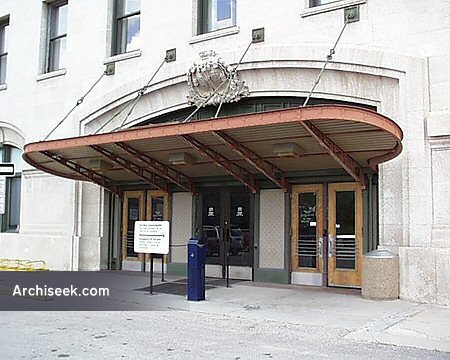

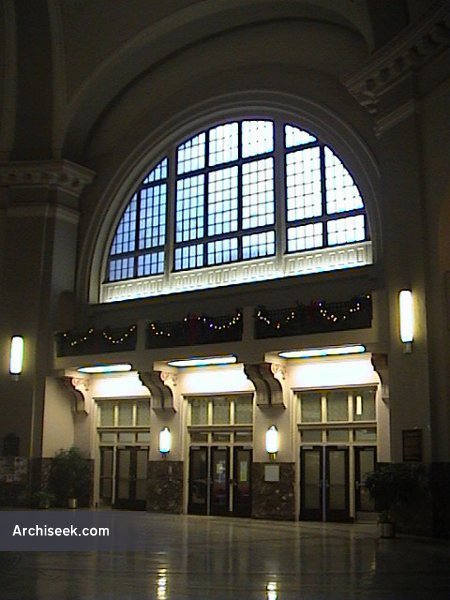




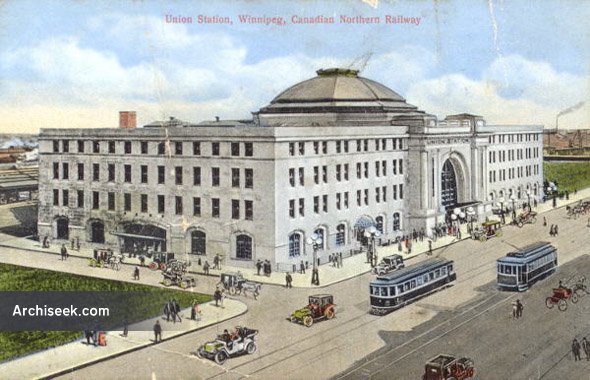
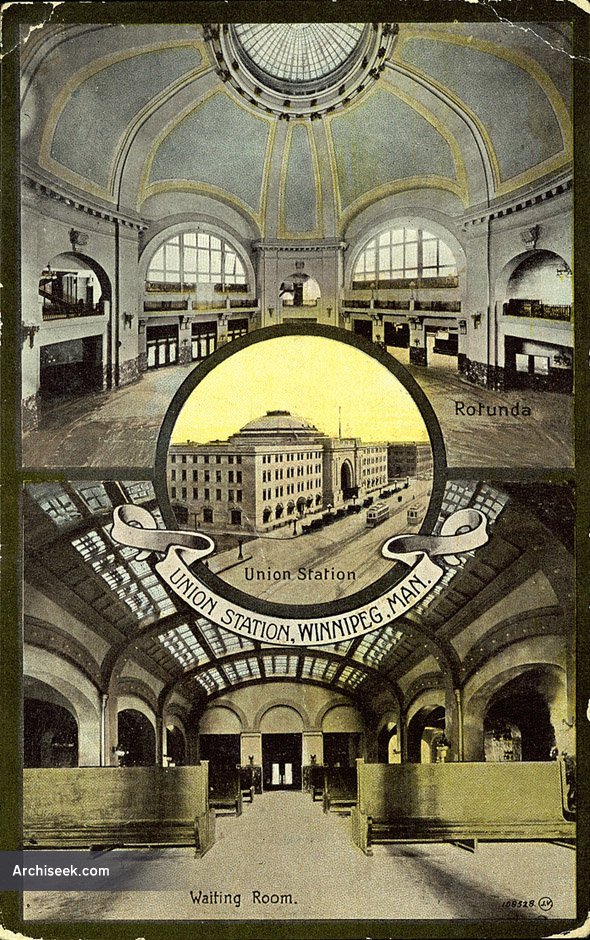


Of the many railway buildings in Winnipeg, the crowning glory is Union Station which closes the vista down Broadway with its imposing bulk and dome. The building was intended by the Canadian Northern Railroad and Grand Trunk Pacific Railroad to surpass the nearby station of the Canadian Pacific. Designed by Warren & Wetmore who were responsible for Grand Central in New York, Union Station extends for some 350 feet along Main Street and is not quite symmetrical, the triumphal arch entrance being offset to close the axis of Broadway. The entrance doors are set under a projecting decorative iron canopy. Passing through a small intermediate space, the passenger emerges into the large central hall.
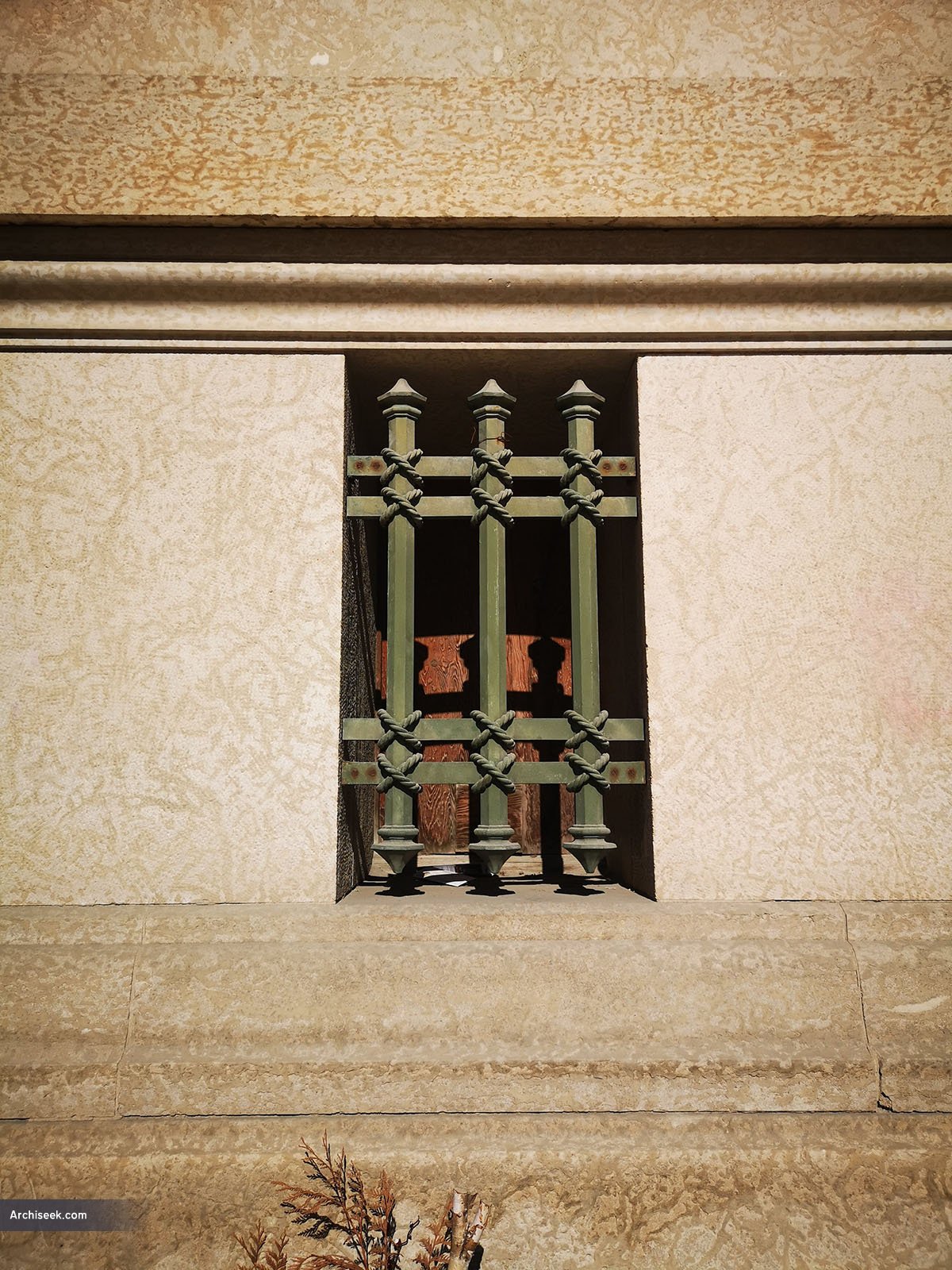
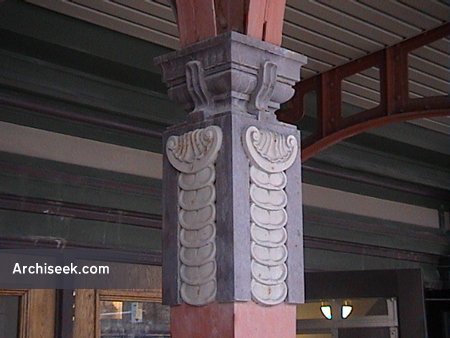
The exterior of the building is quite austere. With the exception of detailing around the entrance and the ground floor, the facade has a plain white limestone finish with little embellishment. The area around the main entrance has fine detailing in the doorways, canopy and decorative ironwork. To the northern side of the main entrance, a smaller entrance underneath the office accommodation features an attractive canopy.
The interior of the station is dominated by the domed rotunda ticket hall which is 100 feet high. This wonderful space is quite dim as it receives no natural light. The rotunda has four large lunette arches with alternating mezzanine balconies and is topped by the shallow dome. Elsewhere in the station, there are some nice details on staircases to the platforms.
“This splendid building covers a ground area of approximately 50,000 sq. ft., the frontage on Main St. being 352 ft. and the depth 140 ft. It forms a part of a comprehensive scheme, involving an extensive system of trackage, train sheds, freight houses, etc., which will give the city one of the largest and best equipped terminals in the world. As regards construction, the station will be of steel, concrete, and stone throughout, and already the work has been carried to the point where the structure is practically enclosed. The height’ of the larger portion of the building is three storey and basement, with an elaborate central portion surmounted by a dome rising 100 ft. above the street level. The main entrance will be through a vestibule leading directly to the ticket lobby. This lobby, which will occupy a clear circular space 90 ft. in diameter entirely unobstructed by columns, seats or booth of any kind, is directly beneath the dome and will be exceptionally well lighted on all four sides by large arched windows. The waiting room will lie north of the ticket lobby, while adjoining it on the west side will be a lunch room and a restaurant, both having separate entrance off Main Street. The interior of the waiting room and the ticket lobby will have the effect of stone construction throughout, the wainscoting being of marble 6 ft. high and the floors of terrazzo. All stairways will be of iron with marble treads. In the south wing of the building will be located the baggage and express rooms, while the entire north wing of the basement is to be devoted to immigrants. and will provide a large waiting room, a laundry, and toilet and bath facilities for both sexes.
The second and third floors will be occupied by the offices of the two railways and by the National Transcontinental Railway, each floor providing an available office space of 25.000 sq. ft., exclusive of corridors, stairways, elevators and toilets. Provision has been made in the design of foundations and the steel structure of the building for the future addition of six office floors so that the building will then be capable of providing 200,000 sq. ft. of office room. The building is so designed that there will be no necessity of artificial lighting in any portion of the day. The heating will be done by steam, indirect system, with mechanical ventilation. The columns arc supported at the foundations by concrete piles, this being necessary on account of the heavy cohimn loads and the character of the blue clay underlying the city.”
Construction, December 1909
Share!
Published June 29, 2010 | Last Updated March 10, 2026


